
Cover Story
A new recipe: US food groups act on additives
Amid political and consumer scrutiny, US food manufacturers are facing the challenge of removing artificial dyes from products. Sarah Schaschek reports.
Main photo by Andrew Harnik / Staff via Getty Images
as US regulators push to remove artificial dyes from food products, manufacturers are moving quickly to eliminate the ingredients, even as they confront a series of industry-wide challenges.
New regulations are being implemented in the next 18 months, such as a nationwide ban on artificial dye Red No. 3 in January 2027 and a ban on foods containing synthetic dyes potassium bromate and propylparaben in public schools across Utah, beginning in the 2026–27 school year.
The moves come as consumer pressure to buy less artificially coloured food is mounting, causing more manufacturers to adopt natural alternatives, with many businesses reformulating their recipes to meet deadlines.
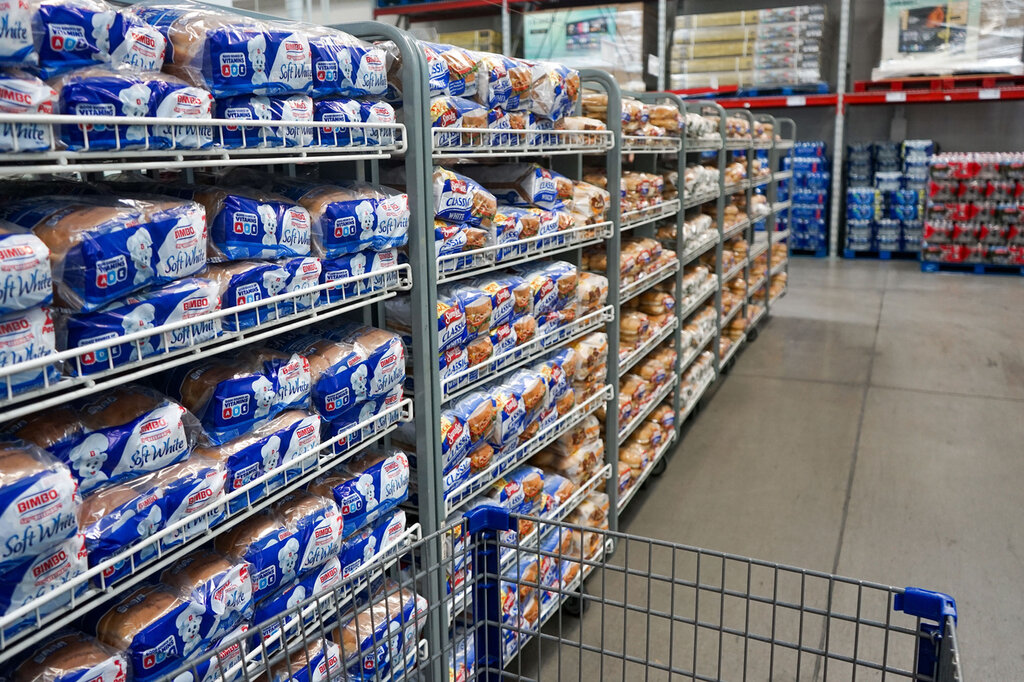
“Nearly every company in the industry is working toward eliminating artificial dyes because that’s what consumers want,” says Kathleen Robbins, vice president of research and development at Bimbo Bakeries USA, the US arm of Mexican bakery giant Grupo Bimbo.
The company is a member of the American Bakers Association, which recently pledged to phase out artificial FDA-approved FD&C [Food, Drug & Cosmetic Act] colours by the end of 2028. Bimbo says all its sliced bread, buns and tortillas are already dye-free and that the company is on track to remove all artificial dyes by 2026, “with substantial progress” achieved across categories.
Advocacy group The Center for Science in the Public Interest (CSPI) tracks the top 24 US food and beverage manufacturers by sales in 2020 and says 11 – including Kraft Heinz, Nestlé and WK Kellogg – plan to eliminate synthetic dyes. “But these companies don’t tend to be the ones that are using the most dyes,” Meghan Enslow, a policy associate at CSPI who oversees the tracker, says. Meat-processing giant Tyson Foods, for example, announced in September it had stopped using petroleum-based artificial dyes and set out plans to remove ingredients including high-fructose corn syrup and titanium dioxide. However, the CSPI, quoting an academic study, said artificial dyes previously appeared in only about 1% of Tyson’s products.

We kind of knew going in where the challenges would be.
Shawn Houser-Fedor, Hershey
According to the CSPI, the six heaviest users of synthetic dyes have been Ferrero, Hershey, Keurig Dr. Pepper, Mars, McKee Foods Corp. and PepsiCo.
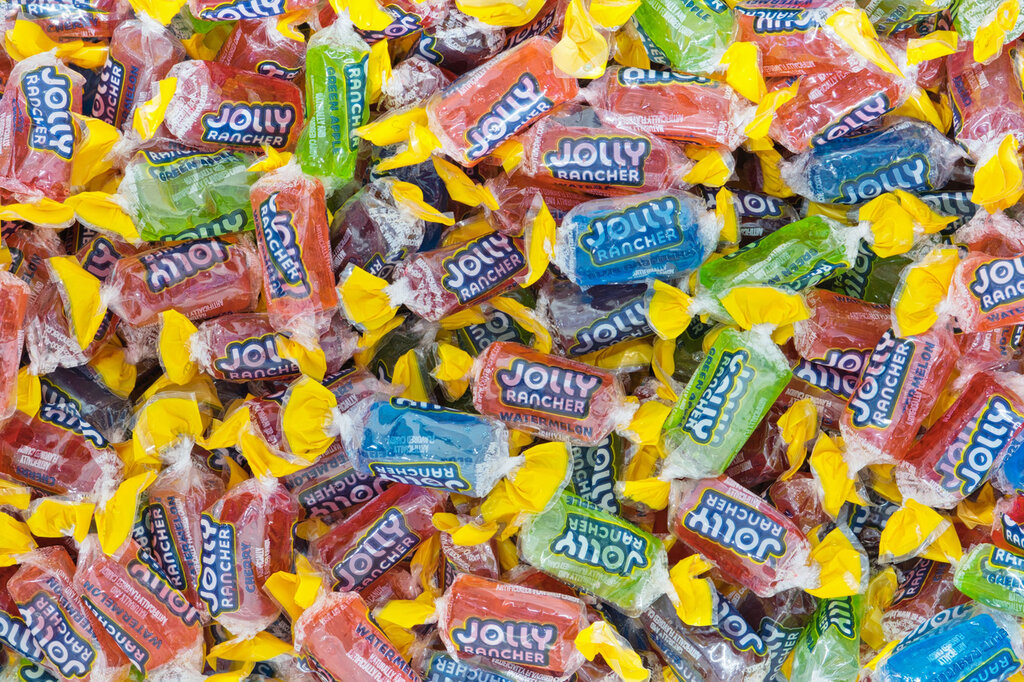
Hershey has formally committed to phasing out synthetic colours and is reviewing its recipes and formulations. “This isn’t brand new for us,” Shawn Houser-Fedor, a senior R&D director for the snacks major, tells Just Food. Her team, which develops confectionery lines Twizzlers and Jolly Rancher, has launched naturally coloured products before. “We kind of knew going in where the challenges would be.”
The process requires combing through hundreds of recipes but Houser-Fedor is confident Hershey will complete the transition before 2028. She says the company plans to keep all its popular products on shelves, and, so far, has not needed to expand its R&D staff. She describes the shift as an extension of ongoing work rather than an extraordinary burden. “We have an amazing, talented R&D team that has a lot of agility to be able to pick up new projects as well as look at our existing products for improvements.”
In July, Mars announced it would “extend consumer choice” by introducing natural-colour versions of four candy brands, including M&M’s and Skittles, by 2026.
In a statement, a spokesperson at Ferrero said: “We comply with all state and federal government regulations and this includes those having to do with colours and dyes.”
Separately, McKee told Just Food: “Our plan is to be dye-free in January 2026, one year ahead of the compliance deadline.”
Keurig Dr Pepper and PepsiCo did not respond to requests for comment.
Patchwork headache
As food manufacturers review recipes, the subject is “a big anxiety for the industry right now”, says Renee Leber, manager for food science and technical services at the Institute of Food Technologists: “No company wants to be the poster child of standing up saying I’m going to be the one that doesn’t make the shift.”
Companies are facing a wave of state-level action. After decades of relatively lax federal oversight, more than 20 US states have introduced bills to ban FD&C dyes and other additives linked to health concerns, including California, Texas and Utah.
One of the big things we hear from developers is that one set of regulations would be easiest.
Renee Leber, Institute of Food Technologists
The most aggressive step so far comes from West Virginia, which has approved a full ban on synthetic dyes starting in 2028. The state may be small (population 1.7 million) but its move has jolted the industry. It has also triggered legal pushback. In October, the International Association of Color Manufacturers asked a district court to strike down the law, arguing the dyes are safe.
Many companies – including those committed to reformulation – are wary of a patchwork of state laws. “One of the big things we hear from developers is that one set of regulations would be easiest,” says Leber.
Major manufacturers, including Kraft Heinz and PepsiCo, are backing a new lobby group, Americans for Ingredient Transparency, which is calling for a single national standard set by the FDA. Critics, such as US watchdog Consumer Reports, argue the group’s real aim is to block stricter, state-level, food-safety laws.
However, Julie Gunlock, senior advisor to Americans for Ingredient Transparency, says the group was formed “because every American deserves the same ingredient regulation and labelling, no matter their ZIP code”. She adds it is also pushing for federal action that includes GRAS (generally recognised as safe) reforms, front-of-package labelling and QR code changes.
For now, the federal government continues to permit six FD&C dyes and the FDA has only urged companies to remove them voluntarily by the end of next year. That worries advocates. “The problem is, people need to be vigilant,” says Jensen Jose, CSPI’s regulatory counsel, arguing manufacturers have promised to phase out synthetic dyes in the past, yet still use them.
New techniques
In truth, for decades, synthetic colours have been favoured for reliability. The same handful of FD&C dyes can produce every shade in the rainbow – whether in cake, yoghurt or a sports drink – and they hold up under heat and light. Natural colours can fade or degrade more easily, raising the risk products will lose their appeal or even be discarded before their actual expiration date. They are also often more expensive.
Leber expects some companies to drop certain colours altogether. A bright honey-mustard yellow, for example, may not be worth recreating with natural alternatives when the trade-off in cost and performance is too steep.
Companies will start with “easy wins,” she says, with reds far simpler to replace than blues. “You want to make the consumer feel good. You don’t want to start by releasing a blue formula that now kind of looks purple.”
Leber says some manufacturers are exploring layering techniques – using one natural red to deliver the initial hue and additional reds underneath to help the colour last through a product’s shelf life. She also sees natural-colour suppliers developing more sophisticated colour systems, containing several colourants tailored to specific uses: “one for icings and systems like that,” she says, “and they’ll have a different one for baked goods.”
Manufacturers may scale back the number of colours they use but the industry is adjusting in parallel, which may ultimately help shape consumer expectations. “The good news is everybody is in the same boat in many ways,” Leber says. “So, odds are, if you can’t get your blue sports beverage to be a bright royal blue, there’s a good chance that nobody can.”
Supply issues
Perhaps the biggest challenge for the industry is the sheer number of major corporations pivoting to natural colours at the same time. “Natural colouring companies are doing everything they can to make sure supply is there but the market may be kind of overwhelmed by this right now,” Leber says.
Bimbo Bakeries and the ABA say the maintenance of reliable supplies of colour alternatives is of concern and, at Hershey, Houser-Fedor, adds: “We’re looking for the best solutions that are going to get us to meet the requirements. That could be a combination of both existing suppliers and new suppliers depending on what they have to offer in this space.”
California Natural Color, a supplier of natural dyes for use in food and drink products, says demand has surged as brands race to reformulate ahead of state-level bans. The company reports working “earlier and more frequently” with food manufacturers’ R&D teams to coordinate reformulation plans, work on colour matching and on longer-term portfolio transitions, a company spokesperson says.
The group sources from grapes, purple sweet potato, radishes and carrots and delivers its colours using a crystal technology designed to maintain stability throughout processing and storage. In the process, a raw material extract is converted into a concentrated crystal form to ensure “consistency from batch to batch” and to enable “very low use rates in products – typically around 0.02% or less”.
The result, California Natural Color says, is a format that works across a wide variety of formulations. Ultimately, such innovation may be how the food and drink industry squares the circle on phasing out artificial dyes, while maintaining the attractive colours that entice shoppers.
