Interview
Meal ticket: Ireland’s DMC Foods targets UK market
Irish ready-meals maker DMC Foods has landed in the UK and CEO Brian O’Leary tells Dean Best why its Fit Foods brand can appeal on the other side of the Irish Sea.
Main image: Brian O’Leary, CEO of DMC Foods.
I reland-based DMC Foods claims to have shaken up the country’s ready-meals market – and now the company wants to do the same across the water in the UK.
The family-run business, which is targeting revenue of at least €60m ($69.5m) has launched Fit Foods – a ready-meals brand offering “everyday health” – in the UK, securing listings with Morrisons.
CEO Brian O’Leary, the grandson of the company’s founder, believes Fit Foods can bring “fresh energy” to the UK ready-meals category and says DMC Foods is looking to move further afield.
Dean Best: What was your assessment of the UK ready-meals category as you prepared for launch?
Brian O’Leary: I suppose we looked at it from the point of view of Ireland. In Ireland, before we launched, we had functional health on one side and on the other we had private label. We created a category within a category. We kind of sit somewhere in the middle. We are healthier than the private label but not quite as healthy as what we call the ‘gym bunny’ meal. Our catchphrase here for Fit Foods is ‘everyday food for everyday people’. That’s what we’re looking at. I don’t think that market exists in the UK at present and that’s the area that we’re trying to attack.
Dean Best: While there are sizeable brands in UK ready meals, it’s still a category in which private label plays a significant role. How do you try to muscle into that?
Brian O’Leary: What we found in Ireland is that people trust brands, particularly when it comes to health We’re not going into the retailers and saying we want to go in instead of A, B or C. We’re saying that we can coexist with all these other brands. And do you know what? If you look at what we’ve done in Ireland, we will be successful in the UK. We might have to tweak it as we go along and, even since we’ve launched it in Morrisons, we have learned there’s bits and pieces of tweaking that needs to be done.
Dean Best: What tweaks have you made so far?
Brian O’Leary: Our biggest seller in Ireland is a wholemeal pasta bolognese with a penne pasta. In the UK, we thought that would have been our biggest seller by a million miles. On the back of that, we’ve changed the name to pasta bolognese. When people see the wholewheat pasta, they might say ‘Wholewheat pasta. I’m not having that.’ We’ve another product, Salted Chilli Chicken, which is a really big seller. Spice Bag is on trend. It’s a big, big thing in Ireland, so we have a little sticker on the top-right saying ‘Spice Bag’. It’s bits and pieces like that as you go along.
Dean Best: Who’s the target consumer?
Brian O’Leary: Interestingly enough, when we first launched in Ireland, we launched towards the gym bunnies. This was back in 2014. Over time, we’ve gone outwards. Kids, grannies, parents eat our meals. Our target consumer is 80% of the demographic. What we’ve seen in Ireland is it’s all incremental spend. People want convenience, they want healthy – or healthier; we never say we’re the healthiest meal in the market but we’re certainly healthier – they want value and they want quality. We always thought health was up here as number one but it’s convenience, price, quality, health that influences people to buy the meals over time.
Dean Best: Looking at the range, Cheeseburger Fries with Gherkins & Peppers doesn’t scream health to me. Are you saying that’s a healthier version of what punters could normally eat?
Brian O’Leary: What we’ve done over the over the years is split our range into ‘core’ and ‘fakeaway’. With the cost-of-living crisis in Ireland and the UK, rather than going out to the pub on a Friday night, or rather than getting a takeaway that might cost you €20-30 ($23-35), we have a fakeaway range – which is Cheeseburger and Fries, the Salted Chilli Chicken – and that seems to sell really well, particularly towards the weekend. In Ireland, our biggest shopping days are Sunday and Monday because, in general, our customers tend to stock up early in the week, eat well and then kind of cheat at the weekend.
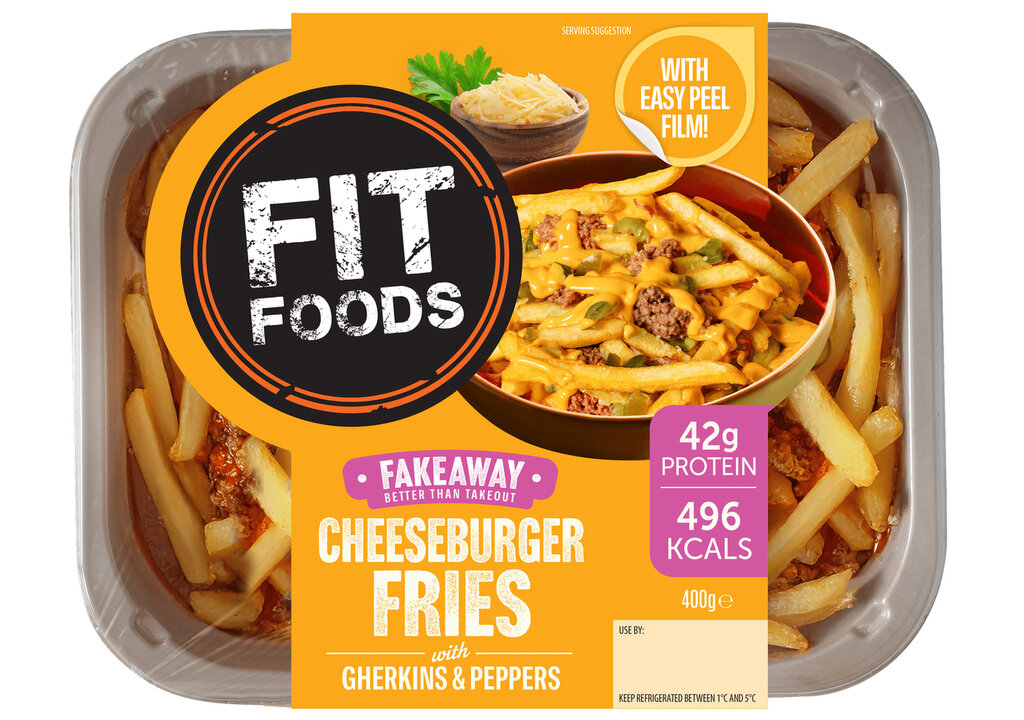
Credit: DMC Foods
Dean Best: On the cost-of-living point, cooking from scratch can be kinder on the wallet. How much can that dent the sales of ready meals?
Brian O’Leary: Ultimately, we’re not saying don’t cook from scratch but we’re saying there’s room for ready meals. There are seven days of the week. There’s lunch and dinner every day. People are really time-poor. I won’t say they don’t know how to cook but, on a lot of occasions, they don’t really want to cook. A lot of the meals that we sell in Ireland are for a lunch occasion. I worked in London in the late 90s. You would go out in your lunch break in the City and you’d have a sandwich. That was just it – a soup and a sandwich. The same in Ireland. That’s gone. We’ve obliterated the sandwich trade in Ireland because now people are having a ready meal. Working from home as well helped.
Dean Best: With the wave of interest in protein building, you’re emphasising protein on the pack.
Brian O’Leary: In general, what we try to do with our core range is be there or thereabouts at 500 calories and over 30 grams of protein. We don’t claim to be a gym-bunny or protein brand but we have our certain call-outs. I’m not saying we hit them all the time but, with our core range, we’re looking at trying to get over 30 grams of protein and try to stay in and around 500 calories. Then once you go into the fakeaway range, there’s a little bit of licence to play with that.
Dean Best: Because of the emphasis on protein on-pack and the brand name itself, do you think there’s a chance consumers might think your ready meals are ultra-healthy?
Brian O’Leary: It’s a little bit easier in Ireland in that we’re a developed brand. Everyone knows where we sit in the category. In the UK, we launched with a digital-media campaign and partnered up with the Arcade Media group, who are the guys who manage the Sidemen. In Ireland, we built the brand on the back of influencer drops. We don’t go after the guys who have 100,000 or 200,000 followers. We look for those who have 10-20,000 followers, who may be teachers, busy mums, coaches in a Gaelic club or a soccer club. Every Friday, we send them two vans, one up to Northern Ireland, one in the south of Ireland and we basically give away ready-meal samples. We’re hoping on the back of that they’ll put it up on their social media platform, or spread the word in a Slimming World class, or a local Gaelic club or outside of schools. That’s what we’re trying to do in the UK as well. We’re starting from zero. We have to build a brand from scratch, which is difficult. However, we’re getting there slowly but surely.
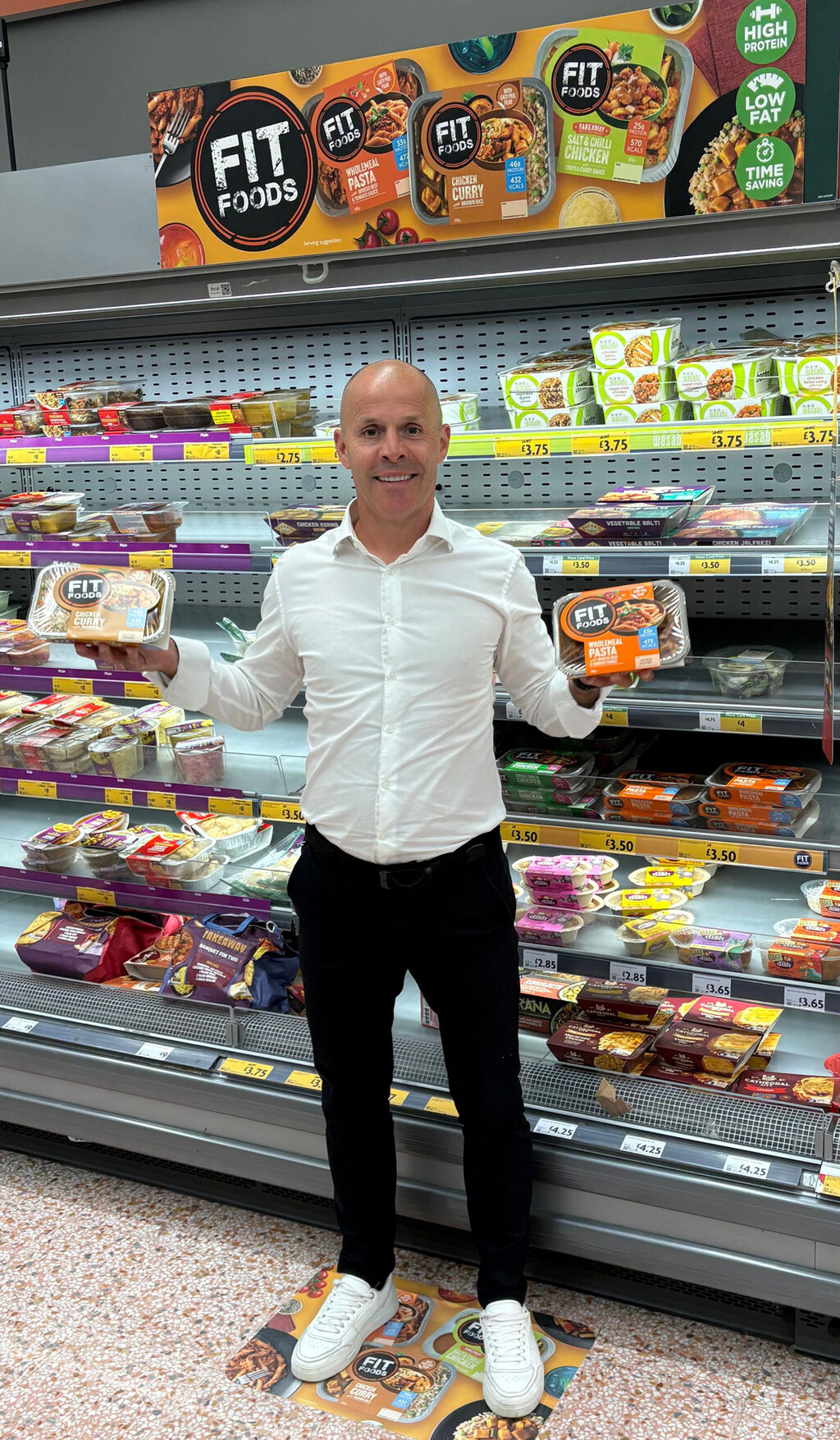
Morrisons is the first UK grocer to take on Fit Foods, with Ocado to follow in January. Credit: DMC Foods
Dean Best: How will you still try to grow Fit Foods’ sales in Ireland?
Brian O’Leary: In Ireland, it’s about NPD. We have this whole new Ozempic thing coming out. No-one really knows where to go. I think everyone’s afraid to be the first mover on that. We have a project in place and we’ll have something coming out in that respect early in 2026. You can’t stand still.
Dean Best: Will that product be marketed at those who are use GLP-1 drugs?
Brian O’Leary: I don’t think you can do that, to be honest. It’s very early, so no-one really knows what the solution is to this. Our view is it’s smaller portion sizes. We’ve looked at it like a product for kids. I have four boys under 11. They all eat Fit Foods but they’ll never eat a full, 400g portion. We’re looking at a smaller portion in a different retail format and we’ll be putting that out there for kids and for older people.
It’s very difficult to know what the answer is but we’re spending a huge amount of money on insights and building up the NPD team and we’re hoping we’ll have a product that works. The one thing that we know is it’s not going away. It needs to be addressed. Somebody’s going to do it and do it right but it’s all down to timing, communication and sensitivities. What do you call out on the pack? What do you not call out? That’s what we’re working hard on behind the scenes.
Dean Best: Another topic rising up the agenda is ultra-processed foods. Ready meals can fall into that, even if there’s some debate around the definition. How do you view the growing attention on UPFs?
Brian O’Leary: Ready meals are going to be better for it. We did a project last year where we stripped out our fakeaway products and core meals and looked at putting clean decks there. I’m not saying previously we weren’t clean decks but a lot of our third-party ingredients, like our stock cubes or bouillons, weren’t. Our back-of-packs now are absolutely bulletproof. They’re better meals. We still have a fakeaway range for people who want to be that little bit bolder on a Friday or Saturday night. We need to be flexible. At the end of the day, it’s not going away. You’ve just got to tackle it head on.
Dean Best: On the wider DMC business, Fit Foods is the only brand in the portfolio, correct?
Brian O’Leary: We do private-label work for Dunnes, Tesco, Aldi, Lidl. We do private-label work for TJ Morris in the UK, so we’ve an existing logistics chain going into the UK, which helps. The main brand that we have in under the DMC umbrella is Fit Foods.
Revenue is about 65-70% in favour of Fit Foods. That’s a split I’m comfortable with at present. The growth for the business is going to come in the UK, so I think over time we’re hoping to see that go up to 70-75% but I think then, on the back of the success of Fit Foods in the UK, it might open the door for some private-label work in the UK.
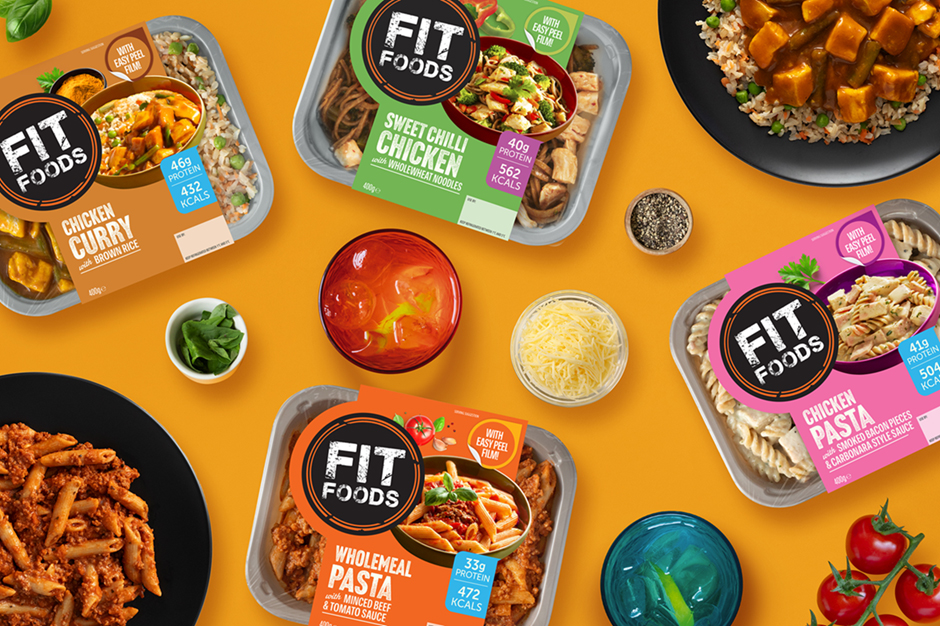
Credit: DMC Foods
Dean Best: How does foodservice play into the sales mix?
Brian O’Leary: At the present moment in time, we don’t do any foodservice. When [investment fund] BGF invested in the business, one of the first things we did was close down our foodservice arm. The old business had a huge amount of SKUs and it was just very, very complex. We’re looking at a Fit Foods foodservice option early in 2026.
Dean Best: What about plans for DMC Foods further afield? You started exports in 2023.
Brian O’Leary: We had a short-term contract with Lidl and exported to Belgium. We had a successful nine months and that’s something that we’re looking to grow as well. It’s not just the UK. We’re looking at the Benelux and we’re looking at a frozen range, which we can take potentially into the United States.
Dean Best: How advanced are those plans?
Brian O’Leary: They’re reasonably well advanced. The conversation on the Benelux is a good bit down the line and we’re not a million miles from pulling the full frozen range together.
Dean Best: Could the US launch happen next year?
Brian O’Leary: In the first quarter of 2026, I’ll be on a plane to the US to speak to retailers in relation to a frozen range of Fit Foods.
Dean Best: In 2022, the then Dublin Meat Company’s acquisition of Swift Fine Foods shaped the business as it is today, alongside the investment from BGF. Is there any appetite for any further M&A?
Brian O’Leary: We must have looked at ten, 12 businesses over the last two, three years. For different reasons, it didn’t suit and but I’m not waking up every morning and going ‘I need to go and make an acquisition.’ I would say that we’d be opportunistic. If there were opportunities, both in Ireland and the UK, we would certainly look at them. That’s where having someone like BGF as a 30% shareholder makes a massive difference.
