Feature
Stay the pace: protein bars face threats to growth

Main video credit: OWAZID3 / Shutterstock.com
Is Europe’s protein-bar market at risk of suffering the same fate as plant-based meat, with consolidation and businesses falling by the wayside?
Stacked supermarket shelves with a multitude of brands offering similar products would suggest so without more innovation and differentiation. In-store price promotions also imply there’s fierce competition to entice consumers as the protein craze gathers pace.
The term protein bars might be somewhat of a misnomer, however. What started out as a snack for gym goers seeking on-the-go protein has spread to the more mainstream and health-conscious shopper, amplified by the emergence of GLP-1 weight-loss drugs and growing interest in protein.
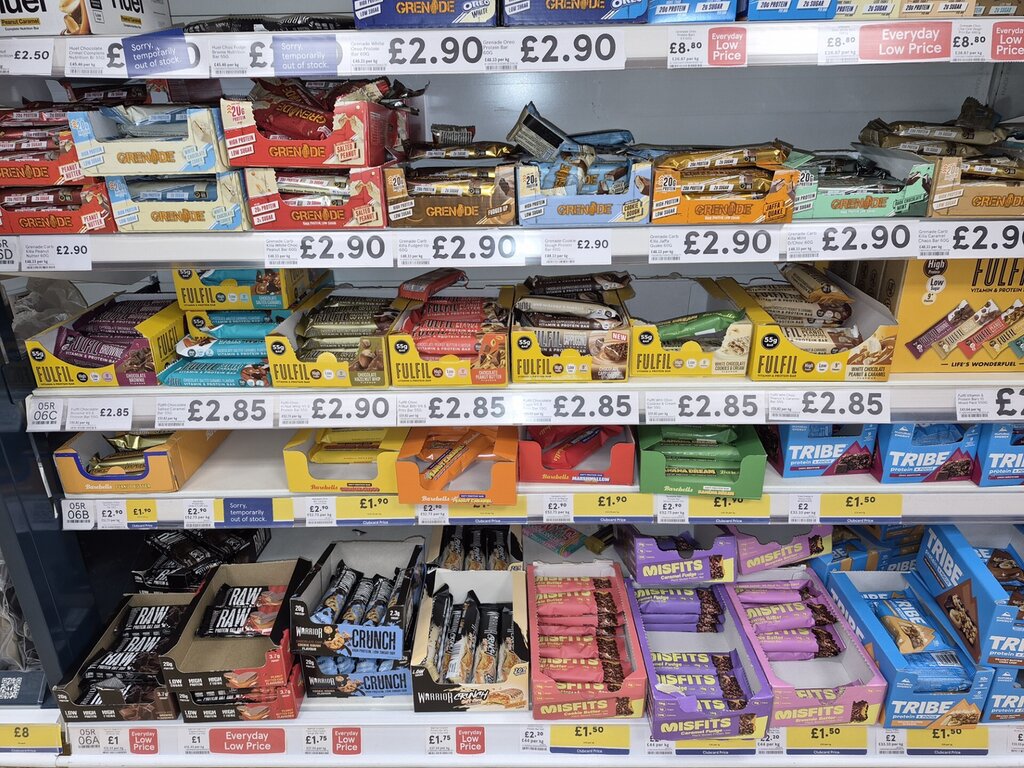
Admittedly there may be audiences with different needs for different occasions. Walk into a UK store and there’s multiple choices but with high-content sports-nutrition bars – often chocolate coated – sitting in the ‘medicine’ aisle and lesser-protein cereal/nut bars in another, alongside what you might call regular snack bars essentially based on similar ingredients.
In the UK, Grenade, Barebells, SIS and Fulfil dominate the sports bars fixture, sitting with other brands such as Warrior, Tribe, N!ck’s and Misfits. Pop along to browse the cereal-bar section with front-of-pack protein labels and the choice is even larger with the likes of Nature Valley, Eat Natural, Kind, Trek and Nakd.
Unlike the US, these bars are also separated from confectionery rather than consolidated in one location. Confusion and/or sheer fragmentation? Ultimately, consumers are looking for the same thing – protein.
Credit: Just Food
While the category has already seen its fair share of consolidation, including among major food manufacturers, the saturation of offerings in cereal and sports bars begs the question of whether there will be more deal-making in a crowded space – and, as was the case with plant-based meat, perhaps business failures.
“In the last couple of years, there hasn’t been much development in the protein-bar category,” says Stefano Di Napoli, the founder and director at consultancy Consumer Products Growth Strategy.
“The big brands that you see now are the same brands that were around a few years ago. In terms of product evolution, there hasn't been great development. Volume has stayed flat.
“How you survive is by bringing in more innovation. If there is no innovation, then consolidation is eventually necessary because if I have 20 protein bars that look the same, how do I choose one from another?”
“New paradigm”
Differentiation will ultimately become the name of the game but for now the protein-bar category is ticking along in what Cyrille Filott, the global strategist for consumer foods, packaging and logistics at Netherlands-based Rabobank, suggests is a high-margin proposition for manufacturers and retailers alike.
And protein bars remain on-trend within the wider scope of anything protein, the search for convenience and an alternative snacking option to chocolate or salty snacks.
Nonetheless, a debate is already emerging as to whether the protein trend has gone too far or whether it still has a runway of growth as it takes in not just bars but other snacks, cooked meals and drinks.
Garyth Stone, a managing director for the consumer-goods practice at M&A advisers Houlihan Lokey, believes the growth does have legs, with the added impetus from the rising use of GLP-1s.
“Overall, people of all types are recognising that they need to get more protein into their diets,” Stone argues.
“The protein trend is here to stay. It is a new paradigm that consumers are finally waking up to the idea that fat, high‑carbohydrate is bad for them, and low‑carbohydrate, high‑protein is good for them.
“That’s independent of all the stuff about GLP‑1s but it is definitely supported, driven and helped by the drugs. You have a much bigger, longer‑term mega‑trend, turbocharged by the shorter‑term impetus of GLP‑1s, which will only get bigger.”
The experience of plant‑based meat
However, the scenario that played out in the plant-based meat sector could well repeat itself in protein bars given the number of offerings on shelf and the lack of differentiation. The winners and losers could well be split between the well-known, and often big corporate-backed brands, and the lesser independents, or otherwise consolidation through acquisition.
The early years of runaway growth in plant-based meat encouraged a plethora of entrants with a relative lack of differentiation, followed by consolidation and the disappearance of some brands as growth slowed. The winners that remained have innovated into new generation products, reformulated with better health profiles, with some embracing technologies such as fermentation, though in many retailers the number of products on offer is smaller.

In the end the shelf will consist of a lower number of brands held by five or seven big food companies.
Cyrille Filott, Rabobank
“When there’s growth, you will see all these new entrants and that’s why growth in protein bars in the last five years has been close to double-digits every single year,” Filott says.
“This will end when the interest dies down and growth goes to low-single-digits and some of the brands will start disappearing from the shelf. However, that could still be far away because currently the tide lifts all boats.”
Representative of the growth is a data analysis Rabobank ran on Tesco in the UK, which Filott says showed a “massive” increase in the broader protein-bar space from 100 or so offerings on shelf in 2021 to 190 now.
“It's survive and thrive,” he argues. “The growth might slow down and some of these brands might survive and do well, and others might disappear gradually. It’s a fashion-type shelf that is evolving but in the end the shelf will consist of a lower number of brands held by five or seven big-food companies.”
Consolidation
Interestingly, Filott suggests consolidation may raise its head in co-manufacturing, a popular avenue for branded food companies that don’t necessarily want to engage in the space with their own dedicated facilities.
John McMullen, the CEO of UK-based contract snack bar manufacturer Wholebake, gave an indication of the demand in a recent interview with Just Food.
McMullen said “hot” was probably an “understatement” when it comes to the number of manufacturing enquiries his company was getting, noting how Wholebake was able to nurture brands from the fledging phase into some pretty weighty players.
“We like to think we can grow somebody from almost a start-up and we’ve got examples and evidence of that, where they start off pretty small with relatively small volumes and almost grow all the way through to either, in our instance, some pretty dominant players in the marketplace, or you get some that get to a place of scale where they start thinking, we’d rather sell the business.”
McMullen suggested there was probably more “mileage” in the growth of the snack-bar category in the UK and Europe but also hinted at the legacy brands that are still there ten or 15 years down the line and are still growing.
With so many co-manufacturers around, Filott says private equity might be interested in setting up a “platform” of companies.
“You need to continuously make yourself interesting to consumers, continuously innovate as there are so many co-manufacturers out there it’s not difficult, relatively speaking, to develop a new product,” he explains.
“When the market stops growing, the co-manufacturing space will also consolidate either by brand owners buying their co-manufacturer or the co-manufacturers being brought together by private equity.”
Credit: Tetyana_Pidkaluyk / Shutterstock.com
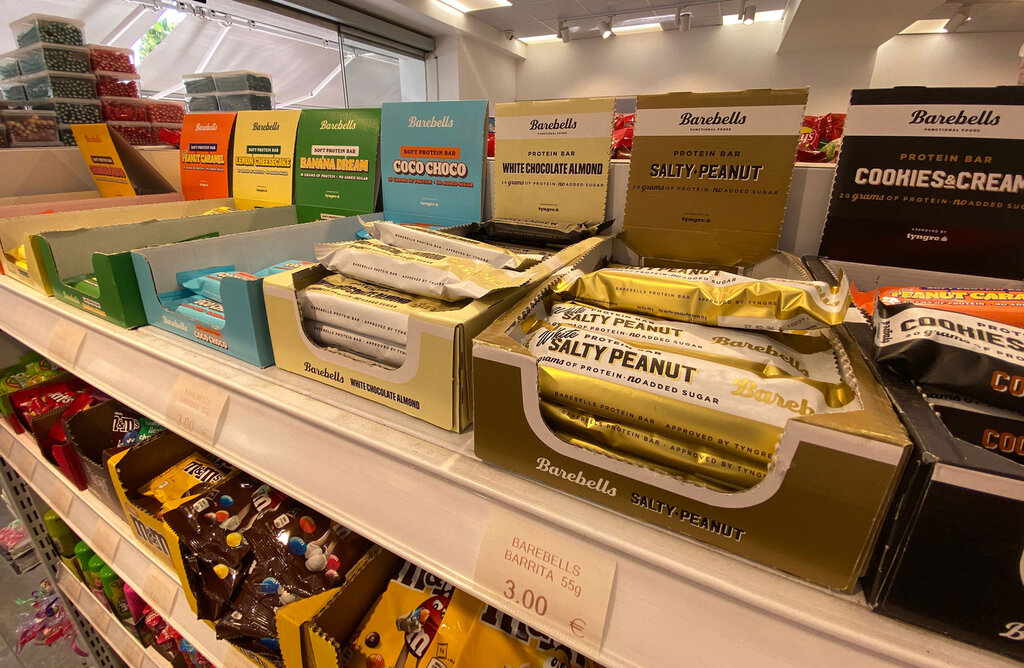
One such deal was seen earlier this year with the business behind Barebells. In August, it emerged the brand’s owner, Vitamin Well Group, itself majority-backed by private-equity firm Cinven, was merging with its contract manufacturer EMPWR Nutrition.
Away from co-manufacturing and into brands, we have seen deal-making in the category by major snacks groups, with, for example, Mondelez International buying Grenade and Ferrero snapping up Fulfil.
Meanwhile, Warrior is owned by KBF Enterprises, while Tribe has been backed by Mercia Ventures. N!ck’s remains in the hands of its founders, Sweden’s Luthman Backlund Foods, and Misfits is still privately-owned too. UK-based Science in Sport (SIS) is under private-equity ownership in the form of BD Capital.
In the case of cereal-type protein bars, Ferrero has also gobbled up Eat Natural while Mars has taken Kind into its portfolio. Trek and Nakd are owned by Belgium’s Lotus Bakeries, both acquired brands. Nature Valley is an in-house brand of US-based General Mills.
Price versus health
As the protein trend gathers momentum, consumers are becoming more health-conscious but also price-wary and won’t necessarily buy a product just because it has ‘protein’ or ‘added protein’ on the label.
There’s also a blurring of the lines not only on where in the store the products are displayed but also the different formats, price points and the amount of protein in each bar.
Cereal/nut bars, for instance, tend to have high single-digit amounts of protein while the sports nutrition variants like Grenade and N!ck’s run into double-digits.
If the fragmentation of store placements wasn’t confusing enough for consumers, the amounts of protein in snack bars and the price worth paying form part of the decision-making process, too.
Many of these bars aren’t cheap but the price people are willing to pay is likely to vary between consumers looking for a quick snack or an impulse buy, to the more serious gym goer and those seeking a health fix.
“There’s a premiumisation story to this in it’s a functional food and consumers are willing to pay for it,” Filott says.
“I haven’t seen a lot of product introductions coming in at lower price levels trying to play the volume game. It is mostly still the value game. It's an impulse, luxury, premium, functional product and most of the time it's on the go.”
However, not all protein bars are as healthy as they appear when you take a closer look at the ingredients lists.
Nonetheless, Di Napoli says they are often seen as a better alternative to sugary biscuits or chocolate bars because of their typically natural ingredients, especially when it comes to the cereal/nut variants.
In the US, for example, Di Napoli suggests consumers across the pond often turn to protein bars as a meal replacement.
“If the category continues to stay a permissible indulgence, there will be consolidation and there will be a shrinkage of the category, which is already happening,” he argues.
“The share in these categories on buying on promotion is 55%, which is really high. From a volume perspective, that’s a negative sign.”
People won’t buy the product just because you add protein on the front of pack, or at least not anymore.
Stefano Di Napoli, Consumer Products Growth Strategy
Di Napoli mentions an unnamed brand that is innovating, with a focus on creatine snack bars, which, he says, “repositions the category more as a meal replacement, on the go, versus an indulgent treat”.
He adds: “If I reposition the category as being closer to something that you can have as alternative to a sandwich, which from a nutritional value gives you everything you need in terms of protein and fibre, then the pricing aspect becomes less important.”
Innovation becomes key, especially around the nutrition and health profile of protein bars, if some players in the category are going to survive. Di Napoli suggests fibre is the next big thing to sit alongside protein, and it could well be that form of differentiation that will attract consumers, and at a corporate level, suitors.
“People won’t buy the product just because you add protein on the front of pack, or at least not anymore,” he contends.
“The natural ingredients, the quality of the ingredients are still way more important than just the protein intake, exactly the parallel that’s really interesting on the plant-based meat side.”
