Cover Story
Impulse interrupted: snack makers react to GLP‑1’s rise
There are early signs GLP‑1 use is eating into sales of more indulgent products. How worried should manufacturers be? Dean Best reports.
Main video credit: Edugrafo / Shutterstock.com
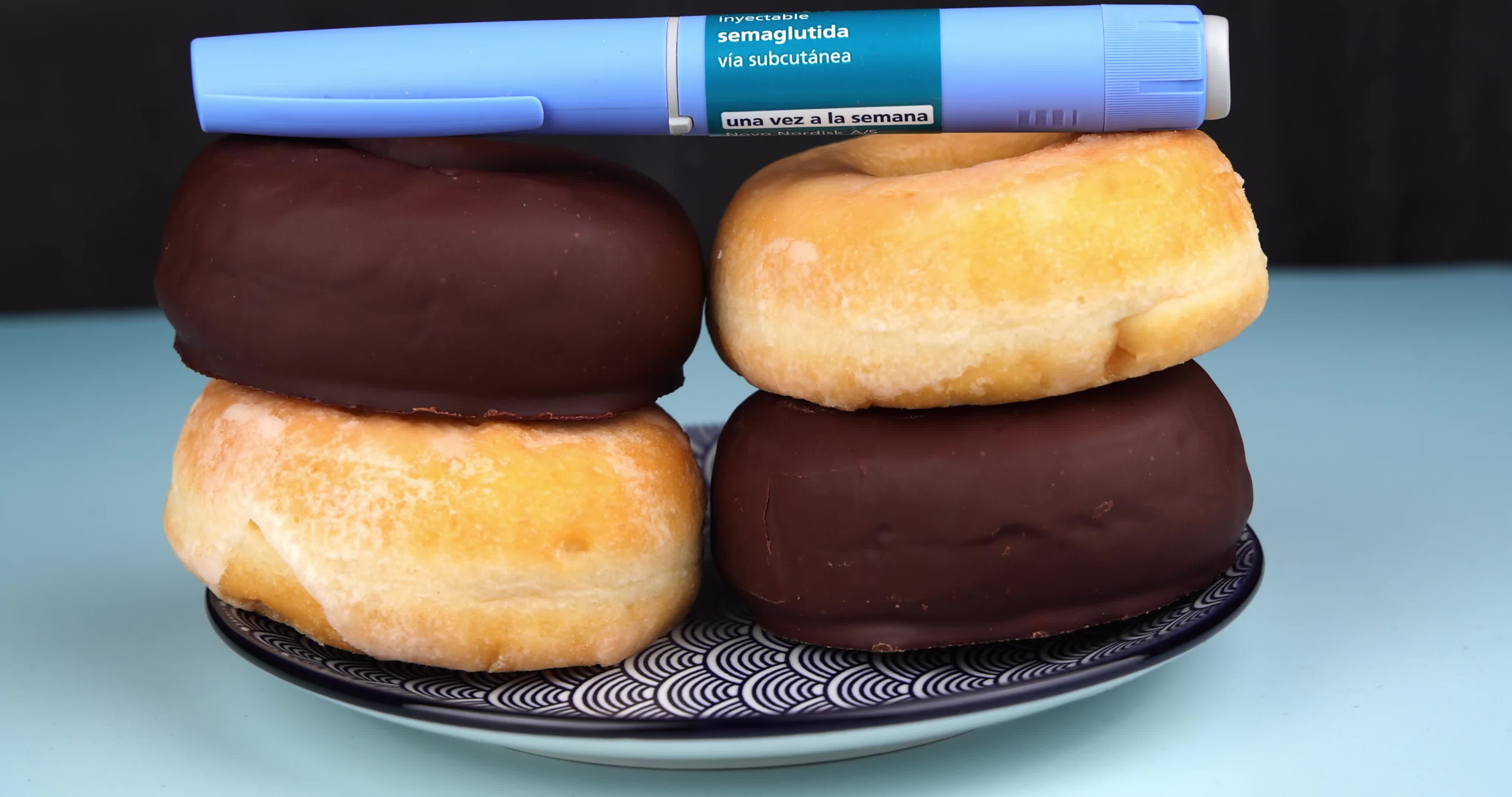
Few issues have grabbed industry – and mainstream food – headlines in recent months as much as the rise of GLP-1 weight-loss medication.
Food CEOs are facing questions about how the drugs are affecting sales and how they are adapting their product, commercial and portfolio strategies.
Precise data on how GLP-1 medication is affecting sales is only emerging but there are signals in the US – where usage is at its highest – and in other markets, including the UK, about how shopping habits are changing.
Given the proportion of the population taking the drugs – a Gallup poll published this month suggested 11% of the US is using GLP-1s for weight-loss purposes (up from 3% two years ago), while 15% have tried at some point – and the launch of pill formats, industry boardrooms should at least be weighing up the possible impacts on their businesses.
Credit: PJ McDonnell / Shutterstock.com
In some parts of the food industry, the medication is seen as something of a boon. This issue’s interview with the head of Groupe Bel’s cheese business in the US shows how the owner of Babybel and The Laughing Cow believes it can benefit, for example, from GLP-1 users’ interest in protein.
Elsewhere, executives in areas like bakery, confectionery, ice cream and savoury snacks would be forgiven if they weren’t scrutinising the early sales data carefully.
Among some of those leading companies on the more indulgent side of the industry, there is an insistence that consumers’ appetite for snacking will continue. Executives feel demand for their core lines will persist and that, even among GLP-1 users, there will remain a desire to treat themselves, even if what they buy, when and how often may change.
Signs of change
It remains early days when it comes to data pointing to how GLP-1 medication has affected buying habits. Figures have been published suggesting the impact on sales varies by category.
Last year, research by Cornell University and consumer-insights group Numerator said US households with at least one GLP-1 user cut their grocery spending by around 6% within six months, with higher-income households reducing their expenditure by nearly 9%.
Spending on products such as chips, baked goods, sides and cookies fell on average between 6.7% and 11.1%. Only a handful of categories showed increases. Yogurt rose the most, followed by fresh fruit, nutrition bars and meat snacks.
In June, researchers at Worldpanel suggested the number of households in the UK with a user of GLP-1 drugs had almost tripled in two years – and they said those households had cut their grocery spending by £780m ($1.04bn) in the first year after the drugs were used.
The findings also revealed treat purchases fell. According to the survey, households with a GLP-1 user cut their spending on chocolate by 18 percentage points more than in homes without one. Additionally, 75% of users said they ate less chocolate and 72% fewer crisps.
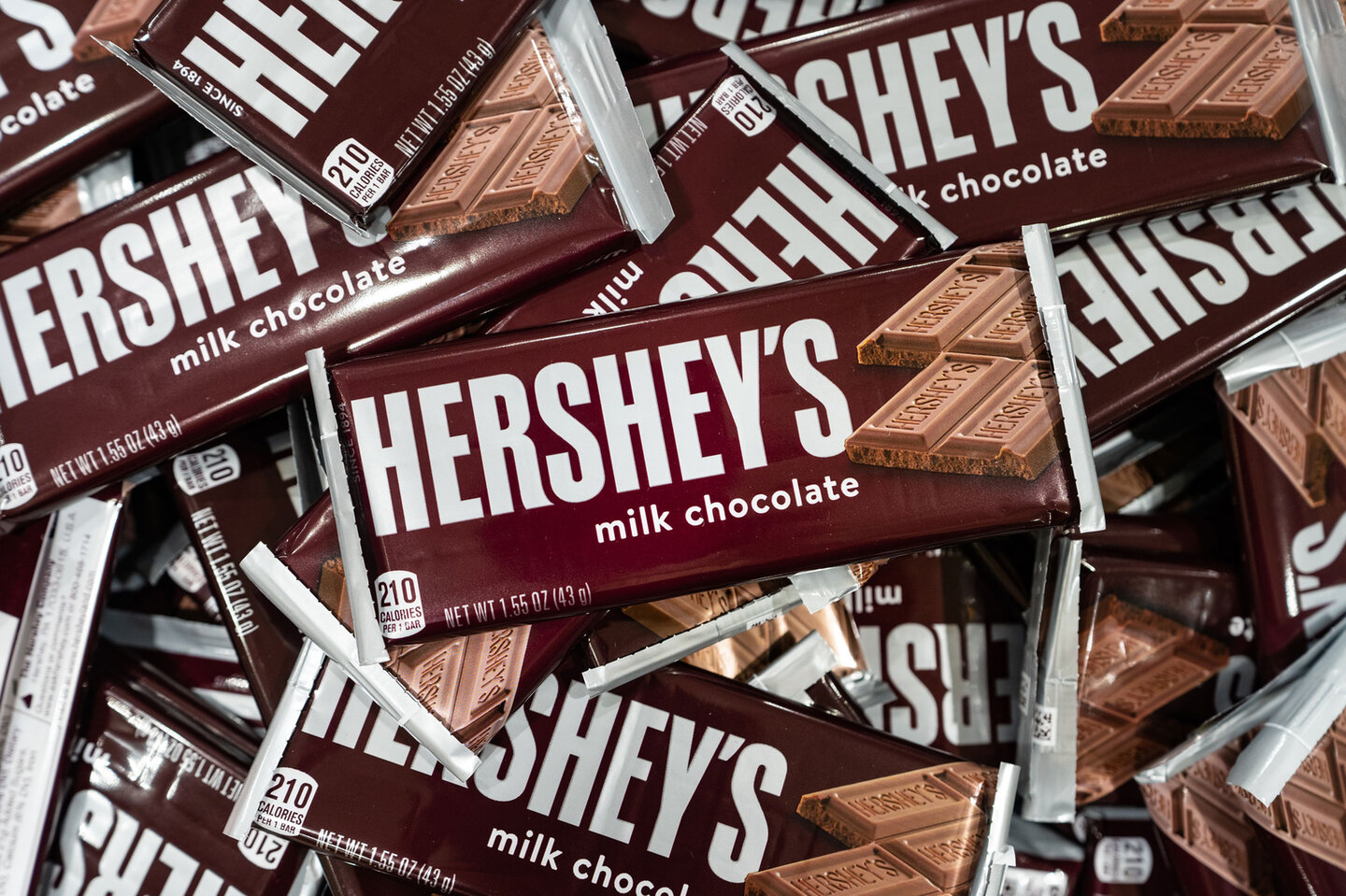
How concerned are executives working in bakery, confectionery and the like? Amy Roe, VP for consumer and commercial intelligence at Hershey, says GLP-1 drugs have “altered how people relate to food” but asserts confectionery is “more insulated than centre-of-plate categories because GLP-1 users are still enjoying their favourite treats”.
Hershey, one of the world’s largest confectioners, says it has interviewed thousands of GLP-1 users about their eating habits. “We heard the same message time and again,” Roe says. “The food noise goes away. Previously, eating occupied their minds and caused a fair amount of stress.
“Now, for many of them, the noise and stress are gone and they feel more in control at home and in social settings. They’re still reaching for the treats they love – many told us they feel freer to enjoy them, without the guilt that used to hold them back.
“They feel confident they can have a bag of chips or package of cookies in the house. It’s a pattern we’re seeing across our own permissible and salty snack brands, too. These categories are proving resilient.”
“Not the end of snacking”
Spain-based private-label cereal and snacks maker Cerealto has operations on both sides of the Atlantic and believes the rise of GLP-1 drugs is amplifying changes in consumption already underway – but underlines the impact should not be exaggerated.
“GLP-1 is a drug that reduces appetite and calorie intake, so, yes, demand is shifting towards more nutrient-dense, low-calorie, low-sugar, single-serve products with more fibre, more protein. We're seeing that but in no way do we see GLP-1 as the end of snacking,” CEO Bosco Fonts tells Just Food.

We’re not over obsessed about GLP‑1.
Bosco Fonts, Cerealto
“On the contrary, snacking is the unlikely winner of GLP-1 because food is shifting towards snacking, on-the-go formats, eating less but more frequently, that sort of stuff. It’s not killing anything in our opinion. It’s not a negative force for snacking in our view.”
Cerealto, Fonts says, has been busy reformulating products to offer its customers options with more protein or less sugar, as well as developing more single-serve and on-the-go products. The company’s recent acquisition of US business Fresca Foods is helping with that work and with consumer insights, Fonts says. “It's [GLP-1 use] way less mainstream in Europe. In the US, it’s more adopted,” he says.
Fonts sees the growing use of the medication “topping up” existing trends and there is, he insists, still room for more indulgent products.
Caption. Credit:
“We’re not over obsessed about [GLP-1],” he says. “We're seeing some impact but, again, it's not the end of snacking. At the same time, we see indulgence still being a premiumisation of products. People want still to enjoy their treats, enjoy chocolate-covered and enrobed products. That's in no way being reduced but, yes, more fibre, more protein, less sugar, and more on-the-go is the name of the game right now.”
Small or premium options – or both
Another business monitoring the topic with business on both sides of the pond is ice-cream group Glacier, which is a private-label supplier and co-manufacturer.
According to executive director Matt Frost, there is “some evidence that consumption from a volume perspective is being impacted” in the US in part due to the category’s focus there on large tubs of ice cream over smaller products but he adds: “From our perspective and, particularly looking at our own numbers, we still see a very buoyant ice cream industry.”
Habits are changing, Frost says, noting “there is definitely more than empirical evidence” that consumers are moving to “smaller formats – whether that be bitesize, whether that be mini sticks”.
He also points to interest in more premium products. “Probably our biggest growing SKU this year is a very high premium, layered gelato,” he says. “It's a really super-indulgent product. We are starting to see growth in those areas because, whilst people might not eat as much, if they're going to treat, they really want to treat.”
More selective
There’s a consensus among industry watchers that GLP-1 users are becoming more selective when they indulge – and when they reach for a sweet or savoury snack they look for smaller, more premium options, or products with healthier attributes (although the latter may not always be easy for some snack makers to pull off).
“One of the clearest early signals is that GLP-1 use appears to be making indulgence more intentional,” Magda Dziuba, commercial analyst at GlobalData, Just Food’s parent, says. “Smaller quantities do not necessarily mean consumers disengage from these categories altogether.”
It’s creating opportunity if manufacturers can settle their nerves a little bit.
Melissa Abbott, The Hartman Group
US consumer-research consultancy The Hartman Group recently surveyed more than 1,000 GLP-1 users in the country on their consumption behaviour.
“What we are seeing is credible consumer level signals that translate into volume pressure, particularly in categories that depend on frequent and relatively mindless or open-ended consumption,” Melissa Abbott, Hartman’s VP for syndicated studies, says.
“Appetite and physical capacity obviously decline, consumers are more selective and so it's creating pressure on the frequency and the portion volume, especially in indulgent categories, in particular.”

Credit: Grazziela / Shutterstock.com
However, Abbott stresses that, for GLP-1 users, “pleasure hasn’t disappeared”, adding: “We’re not characterising GLP-1 as producing a uniform sales shock across indulgent categories. The immediate impact is a change in the architecture of demand, essentially, so smaller portions, fewer occasions and more deliberate product choices. It's actually creating opportunity if manufacturers can settle their nerves a little bit.”
In the UK, Steve Gladwell of European consultancy Food Strategy Associates uses the medication and says his eating habits have changed.
The former United Biscuits and Pladis executive says he has stopped snacking during the day and notes that when he does it tends to be something “more premium”.
“Lindt pulled out some statements six months ago where they said in the US they were seeing their sales grow, especially amongst GLP-1 users versus non-GLP-1 users and I think there’s an element of truth in that. If you’re going to snack, you snack on something that’s more premium, maybe a bit more intense, a bit more satisfying from a smaller eat,” he says.
“No two users are the same”
There appears to be agreement in how snacking habits are changing among GLP-1 users. And, as Gladwell contends, those changes may, in some cases, be having an impact on others close to them.
“If you turn off that food noise, then you haven't got the craving and out-of-home impulse sales are going to slow down,” he says. “Also, you're shopping when you're not hungry. If you talk about the UK, 6% of people are on medication, sometimes Nielsen talk about 12% of households on medication. Those are mostly the gatekeepers and the grocery shoppers and actually you're then changing the whole household consumption or shopping list rather than just your own individual one.”
UK grocery research organisation IGD has been tracking GLP-1 users this year to understand their buying habits and how they’re preparing food through diaries and accompanied grocery shops. It’s also conducted surveys with people on the medication.
Insight director Tom Wakeman agrees the drugs appear to be “supercharging” existing health trends in areas like protein, fibre, nutrient density and, amid an ageing population, portion control.
He also notes IGD is seeing “snacks and confectionery impulse definitely under pressure”, adding: “Our shopper research has identified that quite a lot.”
No two users really are behaving the same.
Tom Wakeman, IGD
However, Wakeman is keen to underline it is a “myth” GLP-1 users are behaving the same way. “No two users really are behaving the same,” he says. “They're not reacting the same physiologically, so they're reacting differently from the impact the drugs are having but then the knock-on effects are different, too. For instance, you might well find you've got people who have got quite ingrained snacking habits. In reality, those are still kind of carrying on. They might be doing it slightly fewer times but they're still doing that. What you're losing is that habitual 3pm, 'I'm hungry'-type habit because the hunger element has disappeared.”
So, while the emerging evidence suggests there are common changes in buying and consumption habits food manufacturers might be able to follow, companies should be avoid thinking that translates into sweeping shifts in behaviour. That, of course, presents its own challenges when trying to develop the right products and meet the right occasions.
Caption. Credit:
“It's the inverse of the latest diet because it's not like ‘Okay, we're going to all eat paleo now’ where you get your list of foods and you can't have this or that,” Abbott says. “People come into using GLP-1s and, while the drug itself may physiologically impact them differently from consumer to consumer on their ways of eating, they’re all coming to this GLP-1 journey with their own unique fingerprint, if you will.
“They may have been someone who didn't cook very much, doesn't have a lot of skillset in cooking. They had more of an interest in drive-throughs and take-out foods and salty/sweet snacks that were ultra-processed. Then there are others who are on the drug but they have a little bit more awareness. So that also changes things significantly.”
Choose product strategy carefully
Above all, there is broad agreement among the manufacturers and the observers interviewed for this article that GLP-1 users still want to indulge in some way; it’s just that how they’re doing so that is evolving.
Abbott, for example, says Hartman’s research indicates salty snacks are showing more pressure but there are signs sweeter snacks are proving more “resilient” in part due to “the nostalgic element” of the products.
At IGD, Wakeman says the organisation is advising manufacturers and retailers how GLP-1 use is affecting consumption. “We’re trying to get away from the sort of doom mongering. That would be another one of our myths, probably, that this is the beginning of the end for grocery retail. We're absolutely not seeing that,” he says. “Yes, absolutely, it's going to have an enormous impact and a significant shift but there's plenty of growth opportunities that are coming along as a result if you move quickly enough.”
Don’t get too fixated about health.
Steve Gladwell, Food Strategy Associates
However, in indulgent categories, it would be facile to think the answer is to turn unthinkingly to the interest in protein or in fibre. The product proposition would have to be right.
“It depends what category you're in. There is an opportunity for people to stress protein and fibre and things like that,” Gladwell says. “I think you must remember in these indulgence areas, those better-for-you offerings are really still quite small. The key purchase driver is taste way above anything else. I would say don't get too fixated about health. Focus on the treat and indulgence piece but make sure that you're exploiting the premiumisation opportunities that gives you.”
Ahmad Khan, senior analyst at GlobalData, agrees. “Manufacturers do not need to turn every indulgent product into a health proposition. There will continue to be occasions where consumers simply want a treat.”
With GLP-1 usage rising and the emergence of pill formats set to make the drugs more accessible and cheaper, this looks set to be a topic all food manufacturers will have to grasp.
At Glacier, Frost, with 30 years of experience in the grocery sector, is keen to underline the company is ready. “There's been plenty of concerns over the years and, if the manufacturer considers what it is the customer wants and adapts their approaches to support what that customer is needing, then we very much see threats as something that we can make into opportunities.”
