Feature
GLP-1 drugs give dairy shot in the arm
The growing use of GLP-1 drugs for weight loss is boosting demand for nutrient-dense foods, presenting opportunities for dairy. Laura Syrett reports.
Main image credit: sebra/Shutterstock.com
The effects of GLP-1 drugs – dispensed under brand names including Wegovy, Ozempic and Mounjaro – on eating habits are having a diverse impact on product development and marketing decisions in the dairy industry. Demand for products such as pastries and cakes with dairy fillings has fallen, while expanding for others, such as protein-rich, low-fat yogurt and cottage cheese, with an overall positive impact on the sector.
Originally developed to treat diabetes, GLP-1 medications have become synonymous with weight loss, with usage increasing rapidly – both through prescriptions for clinical obesity treatment and ‘off-label’ private sales for cosmetic weight loss. Researchers at University College London estimated that 1.6 million people in the UK alone used GLP-1 drugs for weight loss last year. Meanwhile, last August, US-based research organisation RAND suggested nearly 12% of Americans have used GLP-1 drugs for the same reason.
The medicines help consumers feel fuller by mimicking the natural hormone glucagon-like peptide-1 (GLP-1) normally released after eating. Studies have observed users regularly opt for smaller portions, with less desire for high-fat, high-energy, non-sweet foods.
Dairy groups spot opportunity
Last year, Cornell University and consumer-insights group Numerator concluded US households with at least one GLP-1 user reduce their grocery spending by approximately 6% within six months of starting the medication, with higher-income households cutting expenditure by nearly 9%.
The study concluded the largest spending reductions were in “ultra-processed categories”, which includes chips/crisps, baked goods and cookies, where expenditure fell on average between 6.7% and 11.1%. By contrast, spending on nutrient-dense options such as yoghurt and fresh produce increased.
As a consequence, dairy product manufacturers and their customers are reviewing their ranges and promoting existing low-calorie, high-protein products (or launching new items) targeted at users of the medication.
This is an opportunity within mature dairy product markets such as North America and western Europe, where GLP-1 usage is growing, has made the furthest inroads and where demand for dairy has been flat (at best) for many years.
Arla Foods, the European dairy major, is marketing products such as Arla Pro British Mild Cheddar Slices, Arla Skyr 0% Fat Natural Yoghurt and Arla Pro Soft Cheese as “products for a GLP-1-friendly menu” for its foodservice customers.
It has set up a “GLP-1 hub” online, offering insights on GLP-1 users, menu trends and GLP-1-friendly recipes designed to meet the changing expectations of diners.
“GLP-1 and other weight-loss drugs have accelerated the trend we have been seeing in recent years with more ‘educated’ consumers looking for nutritional products that fit their exact situation,” a spokesperson for Arla says. “We definitely see those consumers looking towards dairy to fulfil that need.”

We definitely credit this to a growing interest in health and protein-rich products.
Ed Watts, Ehrmann Cornish Dairy
Meanwhile, Ed Watts, chief commercial officer at Ehrmann Cornish Dairy, the UK arm of German dairy group Ehrmann, tells Just Food the GLP-1-led shift in eating habits has increased interest in its products.
“We definitely credit this to a growing interest in health and protein-rich products. Ehrmann UK and its range of high-protein desserts has expanded in UK retail as a result of growing demand and we plan to continue this growth in 2026,” Watts says.
“Our own High Protein Puddings offer a convenient low-calorie and high-protein option that still feels satisfying and indulgent, a compromise for those consumers that have health or weight-loss goals in mind but do not want to limit themselves.”
Ehrmann has started building a factory in south-west England to produce its Ehrmann high-protein range produced in the UK for the first time, allowing the brand to fulfil growing demand more easily.
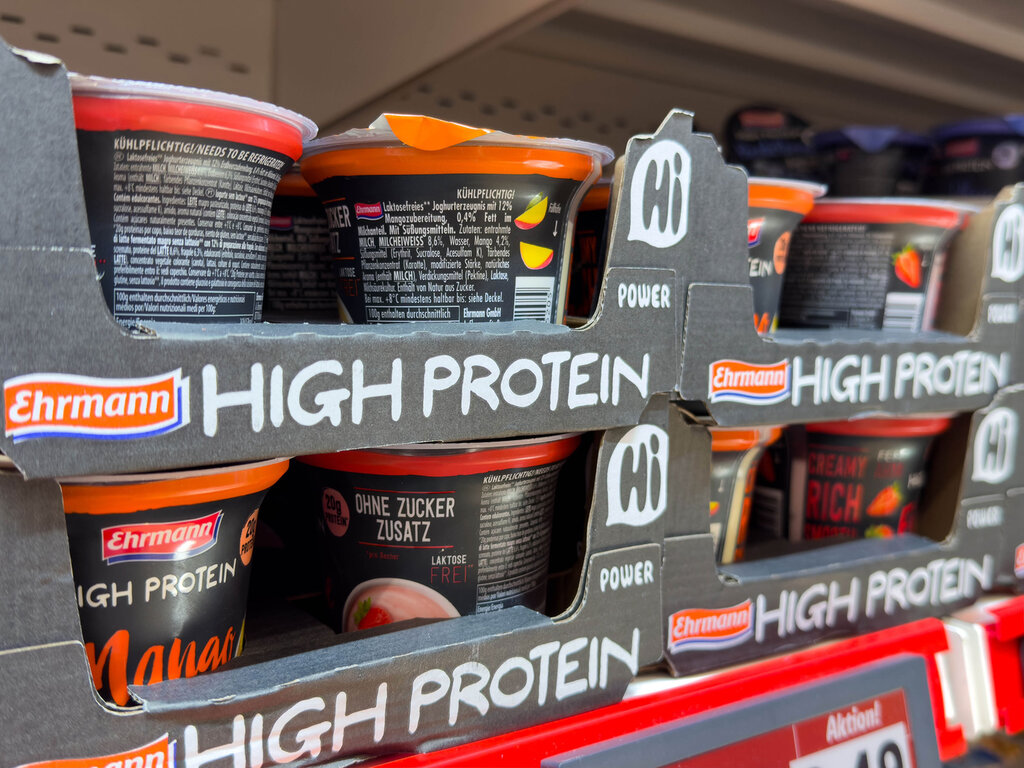
Credit HelgaQ / Shutterstock.com
Ingredient suppliers get active
Further upstream, those working in ingredients are also looking to capitalise on the interest users of GLP-1 drugs appear to have in dairy products. Dutch co-operative FrieslandCampina has developed a line of dairy-based “GLP-1 companion products”. These include ingredients added to manufactured products to appeal to nutrition-conscious consumers, such as its Nutri Whey ProHeat ingredient – a heat-stable whey protein – added to drinkable yogurts and Nutri Whey Isolate Clear, an ingredient used in protein-fortified water.
“GLP-1 users need more in terms of nutrients and even water intake but often consume less due to fluctuating appetites,” FrieslandCampina says. “Multi-functional products that pack quality protein, prebiotics and other vital ingredients into an easy-to-consume format are therefore, true game-changers.”
We have seen increased popularity around spoonable and drinkable yogurts.
Alexandra Hudak, Givaudan
Elswhere, major Swiss ingredients group Givaudan has developed formulations for protein-fortified puddings and yogurts.
“We have seen increased popularity around spoonable and drinkable yogurts, as well as dairy desserts such as puddings,” Alexandra Hudak, a US-based marketing manager at Givaudan, says.
“For individuals using GLP-1 medications, portable dairy products like yogurt offer a satisfying and nutrient-rich way to meet daily intake needs, delivering both functional nutrition and enjoyment in a manageable serving size.”
Traditional dairy gets boost
According to Hamish Renton, the CEO of UK-based food and drink consultancy HRA Global, it’s not just the new specially-formulated products that are proving popular. Some traditional dairy products have also benefited from the rise in GLP-1 drugs, he says. “If you look at what’s going on with cottage cheese, that’s a really good example. A lot of the action is in flavoured cottage cheese, where manufacturers and retailers are seeing huge growth,” Renton explains.
Manufacturers and retailers are seeing huge growth in flavoured cottage cheese.
Hamish Renton, HRA Global
In January, major UK grocer Tesco said demand for cottage cheese “has rocketed by an unprecedented 200% in the last two years” without concerted marketing, albeit aided by interest on TikTok. The retailer has worked with Scottish supplier Graham’s The Family Dairy to launch a cottage cheese with added protein.
“TikTok food trends often result in sudden sales spikes and we saw that happen last year with Italian bread and cheese but this is a fully fledged culinary phenomenon,” Tesco cottage cheese buyer Elizabeth Tomkins says. “Because it’s become so popular with a younger audience, we are ordering in as much as we can because we’re seeing all-time record demand.”
Renton, a former Tesco executive, adds: “Cottage cheese is a very nice, end-of-day product for people. It delivers its protein slowly and is already sold in manageable sized pots, usually of 200 grams or 300 grams, which you keep in the fridge and maybe eat half a pot at a time which fits with what GLP-1 users want in terms of portion size and convenience.”
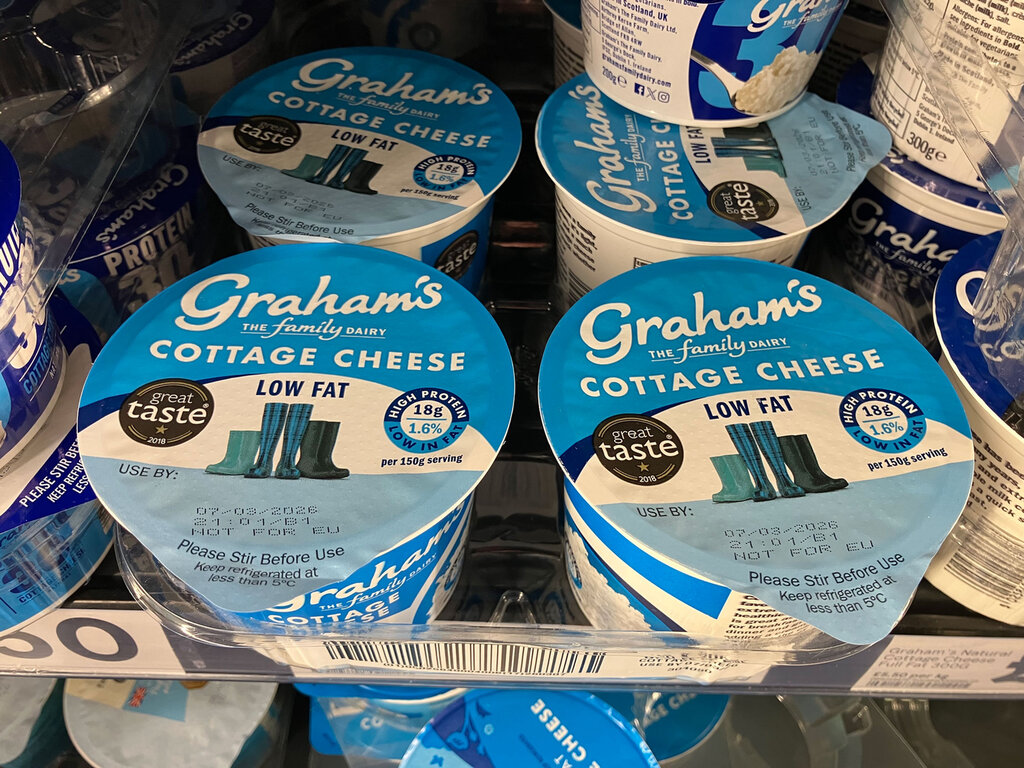
Graham’s The Family Dairy cottage cheese on sale at Tesco, Foots Cray, United Kingdom, 25 February 2026. Credit: Just Food
Renton also notes dairy products sold in formats designed for convenience that pre-dated the rise of GLP-1 drugs are seeing a bounce.
“Sliced cheese and grated cheese continue to power forward as formats. The GLP-1-using shopper doesn’t really want to be dealing with food itself, they just want to open and eat, so [sales of] products that deliver straight out of the packet like a slice of cheese are likely to be growing faster than whole blocks of cheese.”
Overall, Renton suggests that yogurts, including fermented products such as kefir, are arguably the biggest category winner from the changes in eating habits. “Yogurt is permissible indulgence. It’s portionable. It’s literally open and eat. And if you want a bit more indulgence and flavour, there are fruited options and, if you don’t, then there’s natural,” he says.
Some segments may sour
But while nutrient-dense dairy products like yogurt are benefiting from the GLP-1 trend, there may be losers.
According to a report by the UK’s Agriculture and Horticulture Development Board (AHDB) published earlier this month, growing GLP-1 use in the US could be a threat to domestic cheese consumption. Susie Stannard, AHDB’s lead dairy analyst, says whey is “still seeing strong growth potential globally in response to consumer demand for protein, driven by GLP-1 weight loss medicines” and adds: “Some consumers turning to weight-loss drugs such as GLP-1 is an opportunity for dairy.”
Renton says it is still too early to be sure which dairy products might lose out but argues common sense suggests that “traditional ultra-processed foods”, especially snacks such as cookies and pastries with dairy included might see a drop in demand. Increased sales of sliced cheese packs might reduce overall cheese volumes compared to cheese block purchases.
Givaudan’s Hudak notes that products fortified with protein and fibre “can present taste challenges, as higher levels of fortification often bring more pronounced protein off-notes”. The company therefore puts itself forward as being able to offer ingredients to improve the overall flavour and sensory attributes of products with enhanced sugar and/or lower sugar.
Hudak believes dairy companies risk misunderstanding the market and may consequently fail to capitalise on the opportunities presented by GLP-1. “Our analysis revealed that not all consumers using GLP-1 medications have the same needs,” she says. “The GLP-1 journey includes multiple stages [and], depending on where consumers are on that journey, their food and beverage preferences and consumption patterns can vary significantly.”
In general, however, dairy manufacturers are optimistic the GLP-1 effect can boost demand.
“We’re extremely positive about the growth potential for the sector and (...) we’re expecting innovation within the dairy and health sectors to continue as this consumer shift continues,” Watts at Ehrmann says.
